Septic Pumping and Inspection Before Winter in Northern Colorado
Most septic problems in northern Colorado do not announce themselves in July. They show up on a cold January morning, when a tank lid is under a foot of drifted snow, the ground is frozen hard, and the one thing you needed to do in the fall never got done. If you live on a rural lot in Larimer or Weld County, early November is a good time to sort out pumping and inspection before winter makes everything slower.
This guide covers what to schedule, why access matters more in winter than at any other time of year, and which habits help your system get through the coldest months.
Why the fall schedule matters on a septic system
A septic tank works by letting solids settle and the liquid flow on to the soil treatment area, often called the drain field or leach field. Over time the sludge and scum layers build up. Larimer County's health department explains that failing to pump routinely can clog the leach field and cause a premature malfunction, and it recommends that tanks be pumped by a licensed pumper every 3 to 4 years. The EPA gives a slightly wider general range, saying household tanks are typically pumped every three to five years and that the average system should be inspected at least every three years.
Weld County goes a step further and recommends an annual inspection. The point of the inspection is not just to see whether the tank is full. Measuring the sludge and scum layers gives a much better idea of how soon the tank actually needs pumping than counting years on a calendar.
Those intervals are general guidance. A household with a garbage disposal, a large family, or a small tank may need service sooner. A home that sits empty most of the year may need it less often. The EPA notes that a tank should be pumped if the bottom of the scum layer is within six inches of the bottom of the outlet, if the top of the sludge layer is within 12 inches of the outlet, or if more than 25 percent of the liquid depth is sludge and scum. A licensed septic professional can measure that for you.
What winter does to access
The real winter problem is not the pumping truck, it is getting to the tank. Larimer and Weld counties both use a 30 inch minimum frost depth for building design, which tells you how far the cold is expected to reach in a hard winter. Frozen ground, drifted snow and a buried lid can turn a thirty minute service call into a much bigger job.
Before the ground freezes, walk the property and check these points:
- Know where the tank is. Weld County suggests tracing the sewer pipe out through the basement or crawlspace wall, then probing the soil with a thin metal rod roughly 5 to 15 feet from the foundation to find the tank. Draw a map and keep it with your records. Your county health department may also have a permit file for your system, so it is worth asking.
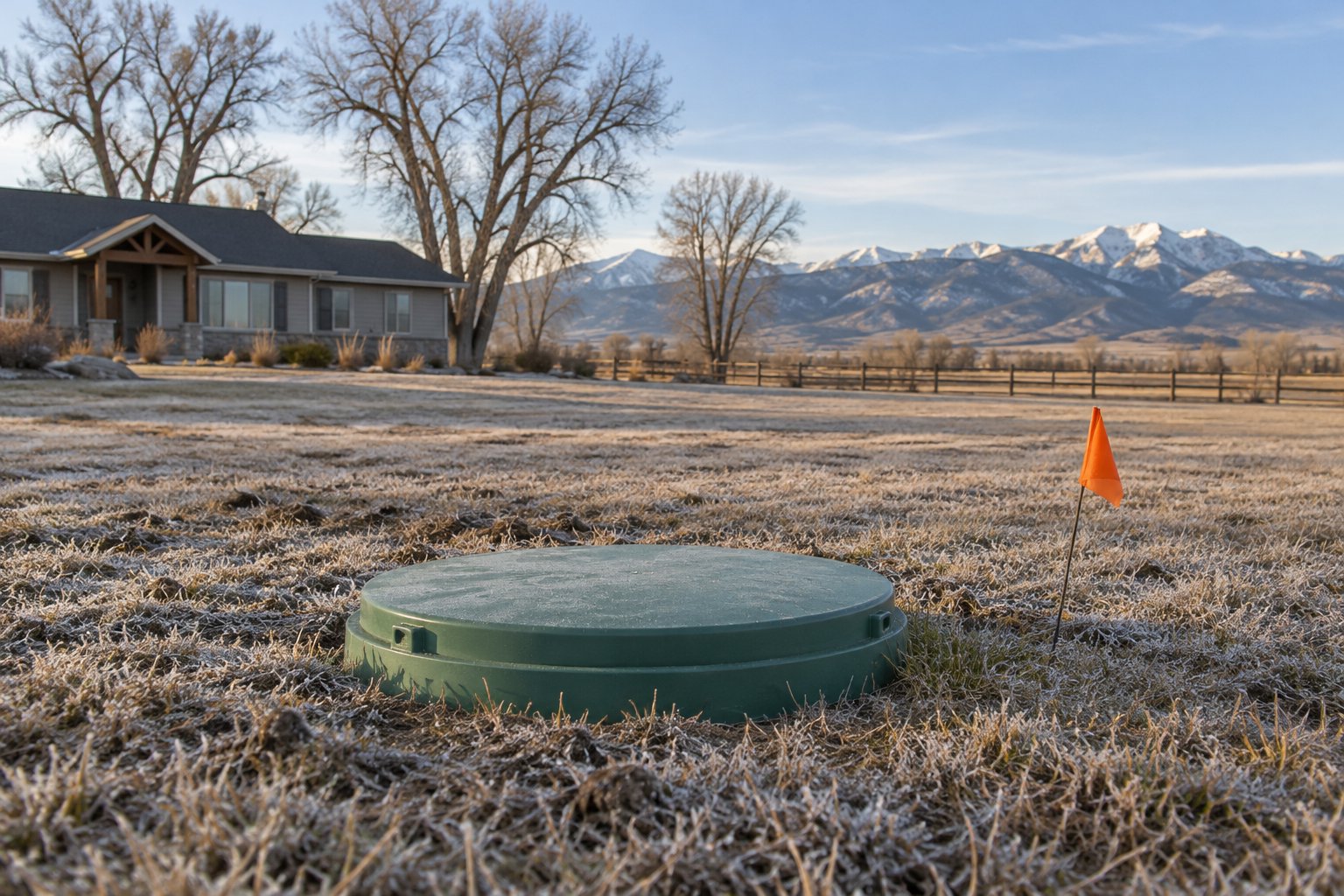
- Look at the lids. A septic tank needs to be reachable for inspection and pumping. Risers bring the access point closer to the surface, and industry guidance is blunt that there is no substitute for safe access at grade. If your lids are buried under sod and you have never had them located, do that now, not in a snowstorm.
- Check that lids and risers are intact and covered. University of Minnesota onsite wastewater specialists point out that open, broken or uncapped risers and manhole covers let cold air into the system and can contribute to freezing.
- Mark the area. A stake or flag at each lid helps you and the service crew find the tank under snow.
Pumping, inspection, and who does what
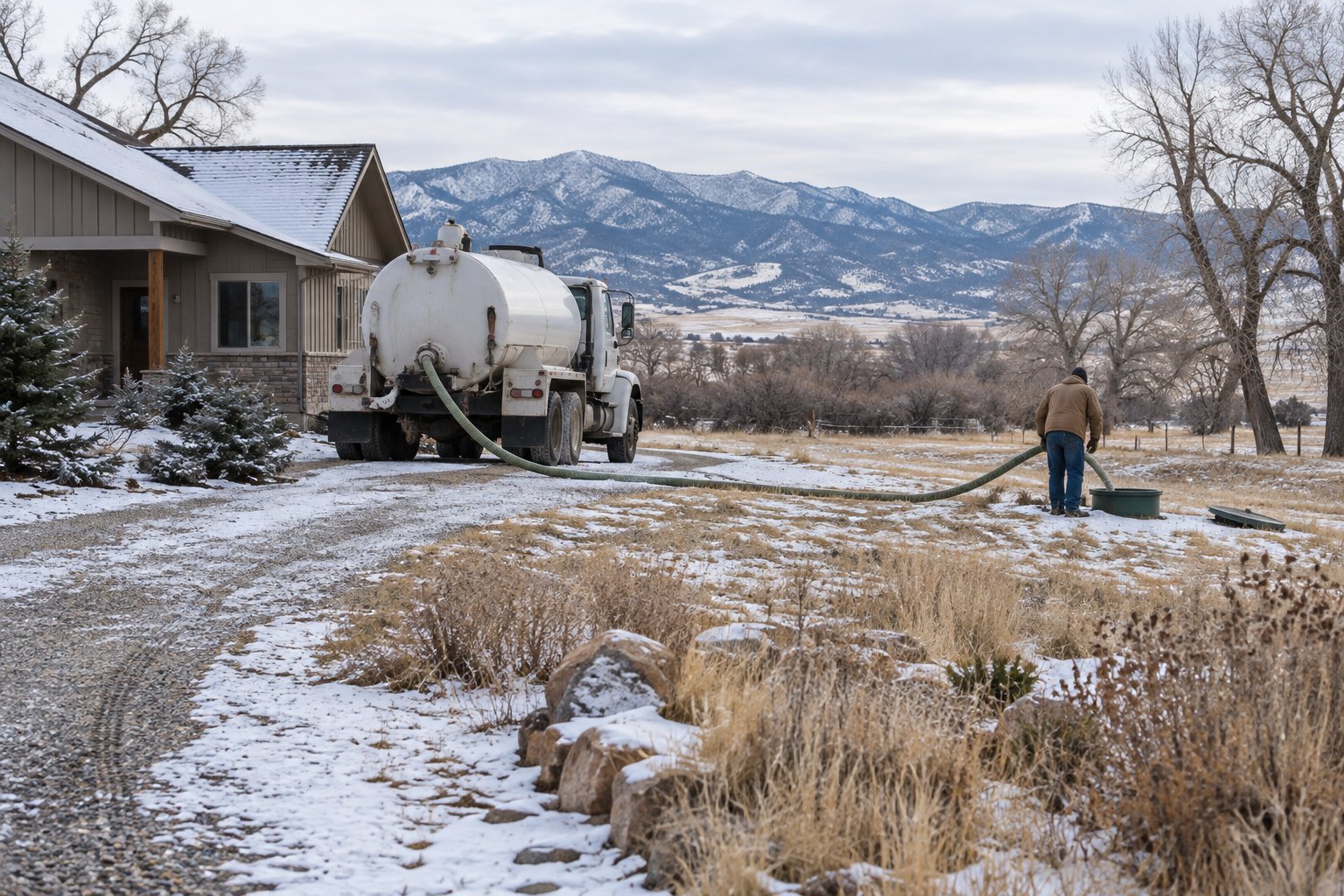
Pumping is normally done by a licensed septic cleaner. Weld County licenses septic system installers and cleaners, and Larimer County's regulations also provide for licensing of systems cleaners, so it is worth asking any provider about their county license before you book.
An inspection is a bit different. A good one checks the tank's condition, the baffles, the sludge and scum levels, and whether effluent is reaching the soil treatment area the way it should. If something looks wrong, a camera inspection can show what is happening inside the lines without digging up the yard. Silverline Excavation offers septic camera inspections, and if the camera or the inspection finds a problem, the next step might be a sewer line repair, a tank replacement or drain field work. That is exactly why fall is a better time to find out than February.
Habits that help the system through the cold months
Septic systems are buried and generally stay warmer than the air, helped by the heat in household wastewater and the insulating effect of snow and soil cover. Problems tend to appear when something undermines that insulation. According to the University of Minnesota onsite program, common causes of freezing include:
- Lack of snow or compacted snow. Snow acts as an insulating blanket over the tank and soil treatment area. Compacted snow insulates less well, and driving equipment over the system pushes frost deeper. Cars, ATVs, snowmobiles, foot traffic and livestock should stay off the system all year, and especially in winter.
- Compacted ground. Driveways, paths and livestock pens tend to freeze deeper, which matters if tank or pipe runs cross them.
- Little or no plant cover. This is common on systems installed late in the year. Letting grass grow a little longer in the fall over the tank and drain field helps hold snow.
- Irregular use. Cabins, second homes or houses left empty for weeks send very little wastewater to the system. If you will be away for an extended time, the same source suggests having someone use water regularly or pumping the tank before you leave.
- Leaks and slow trickles. A running toilet or dripping fixture can freeze inside a pipe over time.
- Pipes that do not drain. Weld County reports that one of the most common reasons its inspectors red-tag a new system is not enough fall on the sewer line from house to tank, and on the effluent line to the distribution box. A minimum of one eighth inch per foot is required so the pipe does not hold water that could freeze in winter.
The University of Minnesota program also lists things not to do if you suspect a frozen system. Do not add antifreeze, salt or septic additives, do not start a fire over the system, and do not run water continuously. If you suspect freezing, call a septic professional.
A simple November checklist
- Locate and mark the tank lids and the drain field before the ground freezes.
- Find your last pumping and inspection record. If you cannot, assume it is time to have one done.
- Schedule a licensed pumper and an inspection, and ask for the sludge and scum levels to be measured.
- Consider a camera inspection if you have slow drains, gurgling, wet spots, or an older system with no records.
- Fix leaky fixtures and make sure every riser and lid is closed and intact.
- Keep vehicles, ATVs and animals off the tank and drain field area, and avoid plowing snow off or piling it on top of the system.
Frequently Asked Questions
Can a septic tank be pumped in winter?
Access is the deciding factor. A pumper needs to reach the lids, so lids buried under ice, drifted snow or frozen sod make any winter visit harder. Ask your provider how they handle winter service, and locate and clear your lids before the ground freezes.
How often should I pump my tank in Larimer or Weld County?
Larimer County recommends every 3 to 4 years with a licensed pumper, the EPA says every three to five years is typical, and Weld County recommends an annual inspection to decide the right timing. Your household size, tank size and water use all play a part.
Should I plow or shovel snow off my drain field?
Generally no. Snow insulates the system. Avoid driving over it, avoid compacting it, and keep it from being scraped bare, since that lets frost reach deeper.
Does Silverline Excavation pump septic tanks?
Pumping is typically handled by a licensed septic cleaner. Our septic services include camera inspections, septic installs, drain field replacement and sewer repairs, so we can help with what an inspection turns up.
If you are planning ahead for winter and want a second set of eyes on your septic system, or you already know something needs attention, request a quote through our contact page. Silverline Excavation serves Fort Collins, Loveland, Windsor, Severance, Greeley, Berthoud, Wellington, Eaton, Timnath and Longmont.


